Introduction
In the past few decades, gaming has transformed from a niche hobby into one of the largest entertainment industries in the world. Within this vast landscape, Esports—short for electronic sports—has emerged as a global phenomenon, redefining competition, community, and culture. Esports represents organized, competitive video gaming, where professional players and teams compete in tournaments watched by millions of fans worldwide. Once dismissed as a pastime, Esports now sits at the crossroads of sports, entertainment, and technology. It has created new career paths, massive audiences, and a fresh narrative about what athleticism means in the digital era.
Esports is not merely about playing games—it’s about strategy, teamwork, sponsorship, performance, and identity. It’s about how young people from different continents connect through digital platforms to pursue excellence, recognition, and victory. The story of Esports is one of innovation and ambition, built on the convergence of gaming technology, internet culture, and the human desire to compete.
The Origins of Esports
The roots of Esports stretch back further than many realize. Competitive gaming first appeared in the 1970s when universities and arcades hosted small contests for titles like Space Invaders and Asteroids. In 1980, the Space Invaders Championship attracted more than ten thousand participants in the United States, a groundbreaking event that hinted at gaming’s competitive potential. Throughout the 1980s and 1990s, arcade games and early console titles such as Street Fighter II and Super Smash Bros. fostered a growing scene of passionate competitors.
However, Esports as we know it today began to take shape in the late 1990s and early 2000s, thanks to the rise of PC gaming and the internet. LAN parties—local area network gatherings—brought gamers together to compete in Counter-Strike, Quake, and StarCraft. South Korea became a pioneer, developing one of the first professional Esports infrastructures. Television channels like Ongamenet began broadcasting StarCraft matches, turning players such as BoxeR and Flash into household names.
From there, global tournaments began to sprout. The World Cyber Games and Major League Gaming laid the foundation for the global Esports ecosystem. These events formalized the rules, structured tournaments, and established Esports as a legitimate sport that demanded skill, practice, and precision.
The Global Expansion of Esports
The 2010s marked the decade when Esports exploded worldwide. Streaming platforms like Twitch, YouTube Gaming, and Facebook Gaming changed how audiences consumed content. Instead of watching highlights or waiting for TV broadcasts, fans could now tune in live to witness their favorite teams and personalities compete. The accessibility of streaming removed barriers and gave rise to an entirely new entertainment ecosystem.
Games like League of Legends, Dota 2, Counter-Strike: Global Offensive, Overwatch, and Fortnite became central pillars of the Esports landscape. Each of these games offered unique strategic complexity and massive competitive scenes. League of Legends established regional leagues in North America, Europe, China, and Korea, culminating in annual world championships watched by tens of millions. Dota 2’s The International set new standards for prize pools, with crowdfunded rewards exceeding forty million dollars in some years.
The expansion also brought investment from traditional sports organizations. Football clubs like Paris Saint-Germain and basketball franchises like the Golden State Warriors began sponsoring Esports teams. Brands recognized that the Esports audience—primarily young, tech-savvy, and globally connected—represented the future of entertainment engagement.
The Rise of Esports Athletes
In the modern Esports world, players are not just gamers—they are athletes. These professionals follow rigorous training schedules, analyze replays, maintain strict diets, and undergo psychological coaching to sustain peak performance. Esports requires reflexes, decision-making, and endurance comparable to many physical sports.
A top-tier player can execute hundreds of precise inputs per minute. A single misclick or miscalculation can mean the difference between victory and defeat. Training regimens involve hours of practice, scrimmages, and team coordination. Like traditional athletes, Esports players face burnout, pressure, and the constant need to stay ahead of evolving game metas and new talent.
The global recognition of Esports athletes has grown immensely. Players like Faker from League of Legends, s1mple from Counter-Strike, and Ninja from Fortnite have transcended gaming to become international celebrities. Their success stories inspire millions, showing that passion for gaming can evolve into a respected and rewarding profession.
The Infrastructure Behind the Screens
Behind every successful Esports tournament lies a complex network of organizers, broadcasters, sponsors, and developers. Game publishers such as Riot Games, Valve, and Blizzard Entertainment have become central pillars in this ecosystem. They not only develop the games but also manage leagues, enforce rules, and support professional organizations.
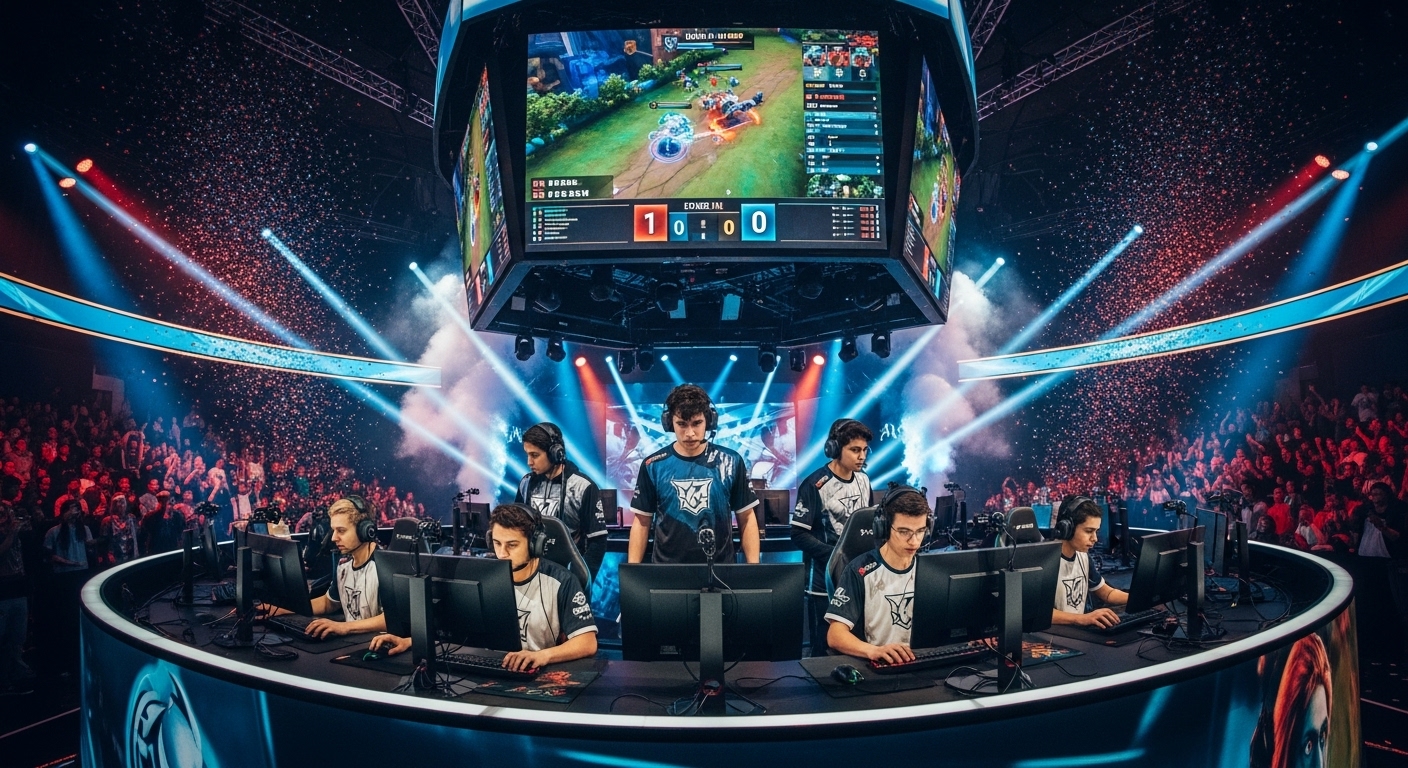
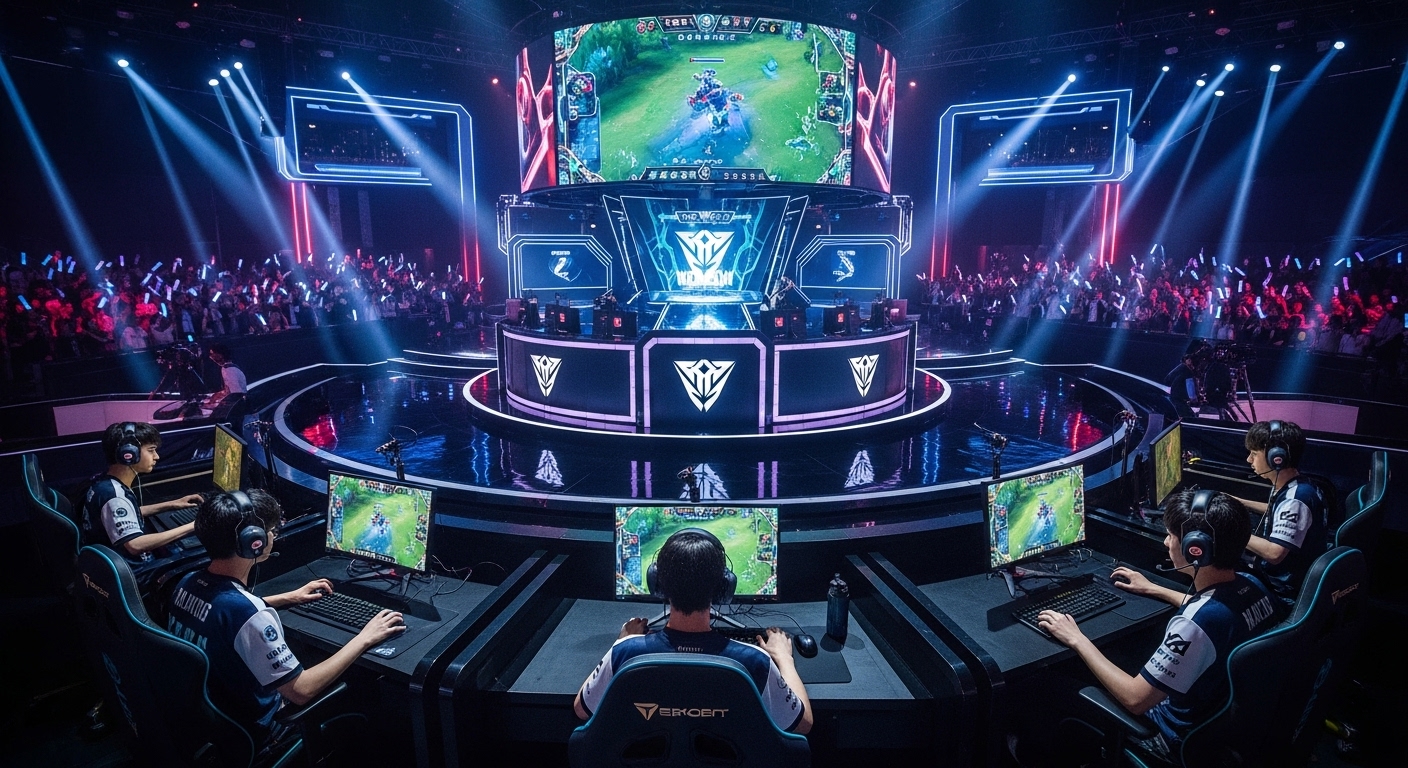
Production quality has also reached cinematic levels. Modern tournaments feature sophisticated stage designs, live commentary, instant replays, and augmented reality effects. Major finals take place in stadiums filled with tens of thousands of fans, their cheers blending with the sounds of digital battles on enormous LED screens. The line between physical and virtual competition continues to blur, creating an immersive hybrid experience that defines modern Esports.
The infrastructure also extends to management and analytics. Teams employ analysts to study opponents, psychologists to handle stress, and marketing teams to build personal brands for their players. Sponsorships, merchandise, and fan engagement now contribute significantly to revenue streams, ensuring Esports remains financially sustainable.
The Business of Esports
Esports is not just a pastime—it’s a multi-billion-dollar industry. Revenue flows from sponsorships, advertisements, media rights, merchandise, and ticket sales. Major brands such as Intel, Red Bull, and Mercedes-Benz sponsor events, leveraging the massive global reach of Esports audiences.
Franchise-based leagues have introduced a stable economic model. For instance, the Overwatch League and Call of Duty League operate similarly to traditional sports franchises, where teams represent cities and share in collective revenue. Investment firms and celebrities have also entered the scene, recognizing Esports as one of the fastest-growing entertainment sectors in the world.
Streaming and content creation have further amplified this economy. Players and teams generate income through sponsorships, fan donations, and partnerships. The convergence of gaming and influencer marketing has blurred lines between competition, entertainment, and community building.
The Cultural Impact of Esports
Beyond its business value, Esports has reshaped culture. It has become a universal language that transcends geography, race, and gender. In a world often divided by borders, Esports unites people under shared excitement, teamwork, and fandom.
The community surrounding Esports is vibrant and creative. Fans produce art, memes, commentaries, and analysis. Events such as cosplay competitions and fan conventions highlight the deep connection between games and identity. Esports also fosters inclusivity; anyone with access to the internet can participate, watch, or aspire to compete.
Moreover, Esports has changed how younger generations perceive sports. Traditional athleticism now coexists with digital performance. Schools and universities across the world are launching Esports programs, offering scholarships and degrees related to game design, marketing, and team management. Governments in several countries recognize Esports professionals as athletes, granting them visas and support similar to traditional sports figures.
Challenges Facing Esports
Despite its meteoric rise, Esports faces challenges that must be addressed for its long-term sustainability. One significant issue is player burnout. The intense schedule and pressure to perform can lead to mental fatigue, stress, and shortened careers. Many players retire in their early twenties, prompting teams to invest in health management and workload balance.
Another challenge is financial disparity. While top-tier teams and tournaments thrive, smaller organizations often struggle to sustain funding. The uneven distribution of prize pools and sponsorships can hinder new talent from emerging.
Regulation and integrity also remain critical. Issues like cheating, match-fixing, and exploitation must be addressed through standardized global governance. As Esports becomes more mainstream, the need for ethical oversight and player rights becomes increasingly vital.
Lastly, representation and diversity still require progress. Although Esports communities are vast, barriers related to gender, accessibility, and regional infrastructure continue to limit inclusivity. Initiatives that promote fair access, diversity, and equity will shape the next phase of Esports evolution.
Technology and the Future of Esports
The relationship between technology and Esports is inseparable. Advancements in computing power, internet speed, and artificial intelligence have all contributed to more immersive and competitive experiences. Virtual reality (VR) and augmented reality (AR) are expected to redefine audience engagement by merging physical and digital realities.
Artificial intelligence is already being used to analyze player performance, predict outcomes, and enhance training efficiency. Cloud gaming could make competitive titles accessible on any device, removing hardware limitations. The arrival of 5G technology further supports low-latency gameplay, allowing players from different parts of the world to compete seamlessly.
The integration of blockchain and digital ownership may also reshape how players and fans interact with Esports. Digital collectibles, tokenized assets, and fan-driven economies could redefine engagement and reward systems. These innovations promise to make Esports not only a sport but also a digital economy and lifestyle.
Esports in Education and Career Development
The growth of Esports has opened new educational and professional pathways. Universities now offer scholarships to Esports players, acknowledging their skill and dedication. Beyond competition, academic institutions teach Esports management, broadcasting, event coordination, and marketing. These programs prepare students for diverse roles within the industry.
Esports also promotes valuable life skills. Teamwork, communication, critical thinking, and adaptability are essential for success in competitive gaming. Many educators recognize that gaming can foster discipline and analytical reasoning when properly guided. For young people who might not excel in traditional sports, Esports provides an alternative space for achievement and recognition.
The Social Dimension of Esports
At its core, Esports is a social experience. Whether it’s a local LAN tournament or a massive global championship, the sense of community drives participation. Online platforms connect millions of fans, allowing them to discuss matches, share highlights, and celebrate victories together.
During times of social isolation, such as the global pandemic, Esports provided a sense of connection and continuity. While many traditional sports faced cancellations, digital tournaments thrived, keeping audiences entertained and connected. This period demonstrated Esports’ resilience and adaptability in the face of global challenges.
Esports also serves as a bridge between generations. Parents who once dismissed gaming as a distraction are now attending events with their children, realizing its cultural significance. The shared excitement of competition builds relationships and dismantles outdated stereotypes about gaming.
Esports and Mainstream Recognition
The inclusion of Esports in major global events marks a turning point in its journey toward mainstream legitimacy. The 2022 Asian Games featured Esports as an official medal event, signaling international recognition of its athletic and cultural value. Discussions continue about potential inclusion in the Olympic movement, reflecting how far the industry has come.
Television networks and streaming giants now broadcast Esports alongside traditional sports. Analysts and commentators bring professional insight, while celebrities and athletes from other disciplines invest and participate. The merging of traditional and digital sports worlds is creating a hybrid entertainment era that reflects the modern generation’s interests and habits.
The Psychology of Competition
Behind every successful player lies the psychology of performance. Esports requires focus, adaptability, and emotional control. Split-second decisions, team synergy, and mental endurance determine victory or defeat. Sports psychologists play an increasing role in helping players handle pressure, recover from losses, and maintain motivation.
The mental demands of Esports are immense. Players face not only the competition within the game but also the constant scrutiny of online audiences. The ability to maintain composure under public pressure is a hallmark of elite Esports athletes. Their discipline and self-control demonstrate that mental toughness is just as essential in digital arenas as it is on physical fields.
The Evolution of Fandom
Fandom in Esports is a powerful force. Unlike traditional sports, where geography often determines loyalty, Esports fandom is global and digital. A fan in Brazil might support a team based in Korea, united by shared values or admiration for a particular player.
Fan engagement happens in real time through social media, streams, and chat interactions. The boundary between spectator and participant is thinner than ever. Fans can directly communicate with players, influence trends, and even participate in community-driven content creation. This dynamic relationship has transformed Esports into a participatory culture, not merely a spectator sport.
Conclusion: The Future of Esports as a Global Phenomenon
Esports stands at the forefront of a new era of competition and entertainment. It has grown from humble arcade beginnings to a global stage that commands the attention of millions. Its players are pioneers, its fans are communities, and its impact stretches beyond gaming into technology, education, and culture.
The future of Esports is bright, but its true potential lies not just in growth but in inclusivity, integrity, and innovation. As technology continues to evolve, Esports will continue breaking boundaries, inspiring future generations, and redefining what it means to be an athlete in the digital age.
Esports is no longer a question of whether gaming can be considered a sport—it is proof that competition, passion, and excellence can thrive wherever humans dare to challenge themselves. The digital arena is our new stadium, and the players are the new champions of the modern world.