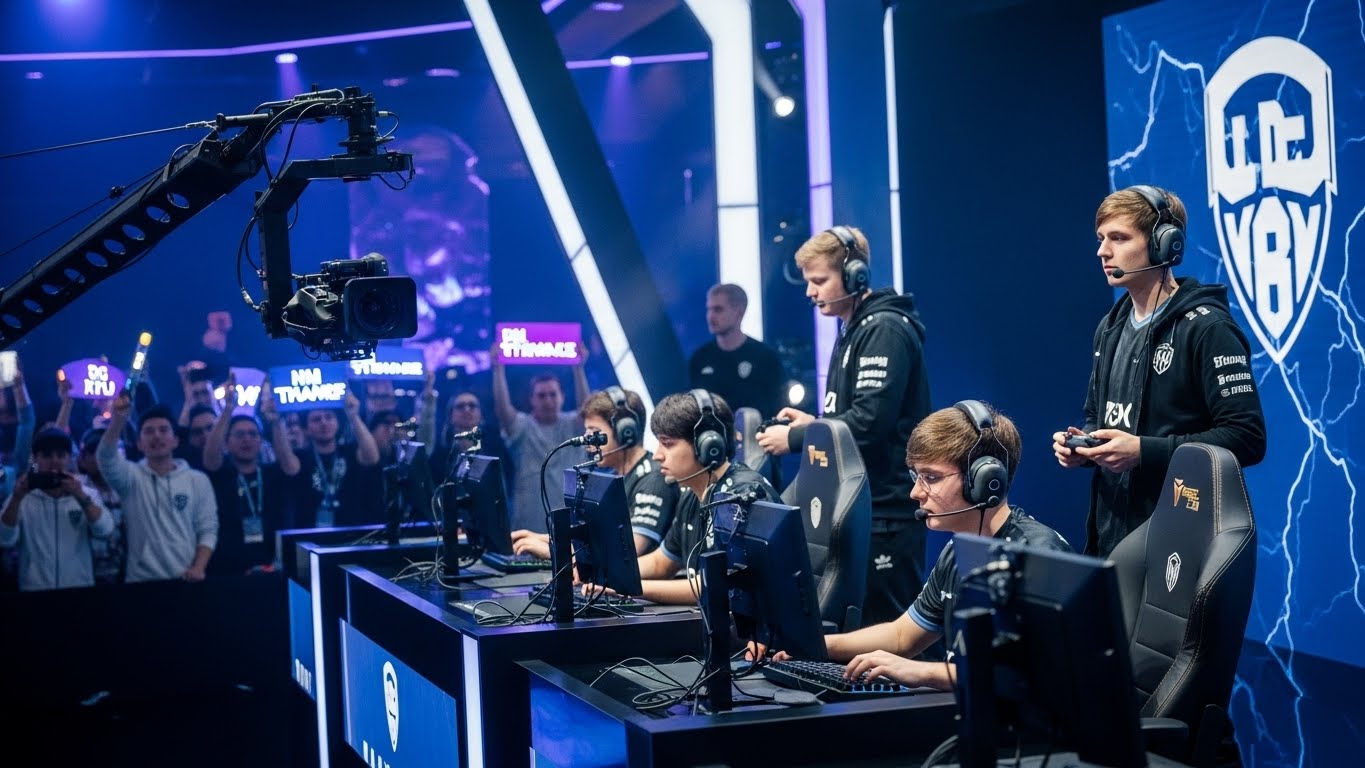
Esports has evolved from a niche hobby into a global phenomenon, captivating millions of viewers and players worldwide. In just a few decades, esports has grown into a multi-billion dollar industry, with professional leagues, international tournaments, sponsorships, and a massive digital ecosystem surrounding it. This journey, from the early days of online gaming to the massive tournaments and professional careers that exist today, showcases the remarkable growth of esports. This article will delve into the history of esports, its impact on global culture, and the factors contributing to its rise.
The Early Beginnings of Esports: 1990s to 2000s
Esports, as a formal competition, can trace its origins back to the early 1990s when gaming enthusiasts began organizing local tournaments in arcade halls and college campuses. However, the actual foundation of modern esports began in the late 1990s and early 2000s with the growth of the internet and the rise of online multiplayer games.
The First Tournaments
The 1997 Red Annihilation Tournament, held by Quake, is often considered one of the first major esports events. This tournament featured players from around the world competing against each other in the first-person shooter, Quake. A pivotal moment in esports history, it had a substantial cash prize and was broadcast live on television. The Red Annihilation Tournament marked a turning point, showing the potential for large-scale competitive gaming.
Another early esports event was the World Cyber Games (WCG), launched in 2000. Known as the “Olympics of esports,” the WCG attracted global attention and established esports as a legitimate sport. The WCG was essential in bringing international players together and laying the groundwork for the future of esports competitions.
During the same period, the rise of popular games such as StarCraft, Warcraft III, and Counter-Strike fueled the growth of local LAN (local area network) tournaments. These games offered multiplayer modes that allowed players to compete against each other in real time, and this sparked a community of competitive gamers around the world.
The Rise of Online Platforms and Streaming: The 2000s to Early 2010s
By the mid-2000s, internet speeds had increased significantly, and high-speed broadband connections allowed for better online play. This period saw the emergence of the first major online esports platforms, where gamers could join tournaments and challenge each other globally. Gaming platforms like Battle.net (for Blizzard games like StarCraft and Warcraft III) and GameRanger helped develop and foster the idea of online multiplayer gaming.
The Impact of Streaming Services
The introduction of streaming platforms such as Twitch in 2011 was a game-changer for esports. Twitch, initially a platform for casual gamers, quickly became the go-to platform for live streaming competitive gaming events. By allowing users to stream their gameplay to a global audience, Twitch opened the doors for esports enthusiasts to follow their favorite players, teams, and events from the comfort of their homes.
In parallel to Twitch, YouTube began hosting esports content, showcasing tournament highlights, gameplay tutorials, and live streams. With platforms like these, fans could watch games, competitions, and championships in real time, helping boost esports’ popularity worldwide. The rise of digital content helped make esports accessible to millions, facilitating a deeper connection between the players and their fans.
Growth of Major Esports Titles
As esports began to gain more traction, several games became central to the scene. League of Legends, released in 2009, became a cornerstone of modern esports. Its combination of strategic depth, high skill ceiling, and free-to-play model made it an instant success. The League of Legends World Championship, which began in 2011, soon became one of the most-watched esports events globally.
Another major title that helped establish the esports ecosystem was Dota 2. The International, Dota 2’s world championship, began in 2011 and set records for its prize pool, surpassing the $1 million mark in its first year. As prize pools grew, so did the level of competition, pushing players to hone their skills to a professional degree.
In the first-person shooter genre, Counter-Strike: Global Offensive (CS:GO) continued to thrive, having become one of the most popular esports titles in the world. Teams from all over the globe competed in tournaments like ESL Pro League and DreamHack Masters, further solidifying the role of FPS games in the esports landscape.
The Globalization of Esports: Mid-2010s to Today
By the mid-2010s, esports had reached a point where it was no longer just a hobby for a niche group. It had become an industry in its own right, attracting huge investments from tech giants, traditional sports organizations, and mainstream media. Esports became a globally recognized phenomenon, with organizations, teams, and leagues spread across every continent.
The Formation of Esports Leagues and Organizations
Major gaming companies and organizations recognized the potential of esports and started creating structured competitive leagues. For instance, Riot Games launched the League of Legends Championship Series (LCS), a professional league that divided North America and Europe into divisions of top-tier teams. These leagues professionalized the gaming scene, and players were able to earn a salary, much like traditional athletes.
Similarly, Blizzard Entertainment introduced the Overwatch League (OWL) in 2018, which featured city-based teams, a model similar to traditional sports leagues such as the NBA. The OWL’s innovative structure attracted considerable media attention and brought esports closer to the mainstream.
The Esports Integrity Commission (ESIC), founded in 2016, also emerged as an important body to ensure fair play and address cheating, match-fixing, and other ethical issues within the esports ecosystem. This helped establish esports as a legitimate, regulated industry, gaining more trust from sponsors, investors, and players.
Esports as a Career Path
As esports continued to grow, it opened new career opportunities not only for players but also for coaches, analysts, broadcasters, event organizers, and content creators. Top-tier professional players were able to make a living through sponsorships, salaries, streaming revenues, and prize money. Some esports stars, such as Faker (League of Legends) and s1mple (CS:GO), became household names, drawing massive fanbases and securing sponsorships from major brands.
Streaming platforms like Twitch allowed aspiring players to build personal brands and make careers out of gaming. Many former professional players transitioned into content creation, while others became team coaches, analysts, or casters. The esports ecosystem thus developed a complex infrastructure, with opportunities for people to engage with the industry from various angles.
Esports and Traditional Sports
The integration of esports into traditional sports has been a significant development in recent years. Traditional sports organizations, such as the NBA and NFL, began investing in esports teams and leagues. The NBA’s involvement with NBA 2K League, a competitive league for the NBA 2K video game series, is a prime example of how esports and traditional sports have converged. Similarly, soccer clubs like Manchester City and Paris Saint-Germain have fielded esports teams that compete in games like FIFA and League of Legends.
Additionally, the mainstream acceptance of esports as a sport led to its recognition by various governing bodies. Esports was included as a medal event in the 2022 Asian Games, further legitimizing it in the eyes of international sporting organizations.
The Social Impact of Esports
Esports has also had a profound social impact, changing the way people engage with games, interact with each other, and even approach education and teamwork. For many young people, esports represents more than just entertainment; it offers a sense of community, friendship, and shared passion.
Fostering Community and Identity
Esports communities are incredibly diverse, attracting individuals from all walks of life, cultures, and backgrounds. Through platforms like Discord, Reddit, and Twitter, fans can connect, share their love for games, and follow the careers of their favorite players. Online communities form around specific games, where players and fans can interact, discuss strategies, and form friendships that transcend national borders.
The Role of Esports in Education
In recent years, esports has even made its way into schools and universities. Several universities now offer esports scholarships, recognizing gaming as both a sport and a legitimate academic pursuit. Esports programs in schools provide students with opportunities to develop teamwork, communication, problem-solving, and leadership skills that are transferable to real-world jobs.
Many esports organizations also run training programs, boot camps, and workshops to help budding players improve their skills. These educational initiatives are valuable for players who wish to enter the competitive esports scene professionally.
The Future of Esports
Looking ahead, the future of esports seems incredibly bright. The industry continues to expand at an exponential rate, and new technologies, such as virtual reality (VR) and augmented reality (AR), may shape the next generation of competitive gaming experiences.
As esports continue to grow, it is likely that we will see even more integration with traditional sports, entertainment, and media. Sponsorship deals, broadcasting partnerships, and collaborations with mainstream brands will further enhance the global reach of esports. The increased recognition of esports as a legitimate sport also means that it may receive more attention from government organizations and institutions.
Esports is expected to continue expanding into new regions, including emerging markets in Asia, South America, and Africa. With internet access improving globally, more people will have the opportunity to participate in and watch esports, making the industry even more inclusive and diverse.
Conclusion
Esports has come a long way since its humble beginnings in the late 1990s. From small local LAN parties to global events with millions of dollars in prize money, esports has become a powerhouse in the entertainment industry. It has transcended its roots in gaming to become a major cultural force, influencing everything from social media trends to career paths for young people.
As the industry continues to evolve, one thing is certain: esports is here to stay. The growth of esports shows no signs of slowing down, and its future is incredibly promising. Whether you’re a casual gamer or a professional player, the world of esports offers opportunities, excitement, and a sense of community that will continue to resonate with players and fans for generations to come.