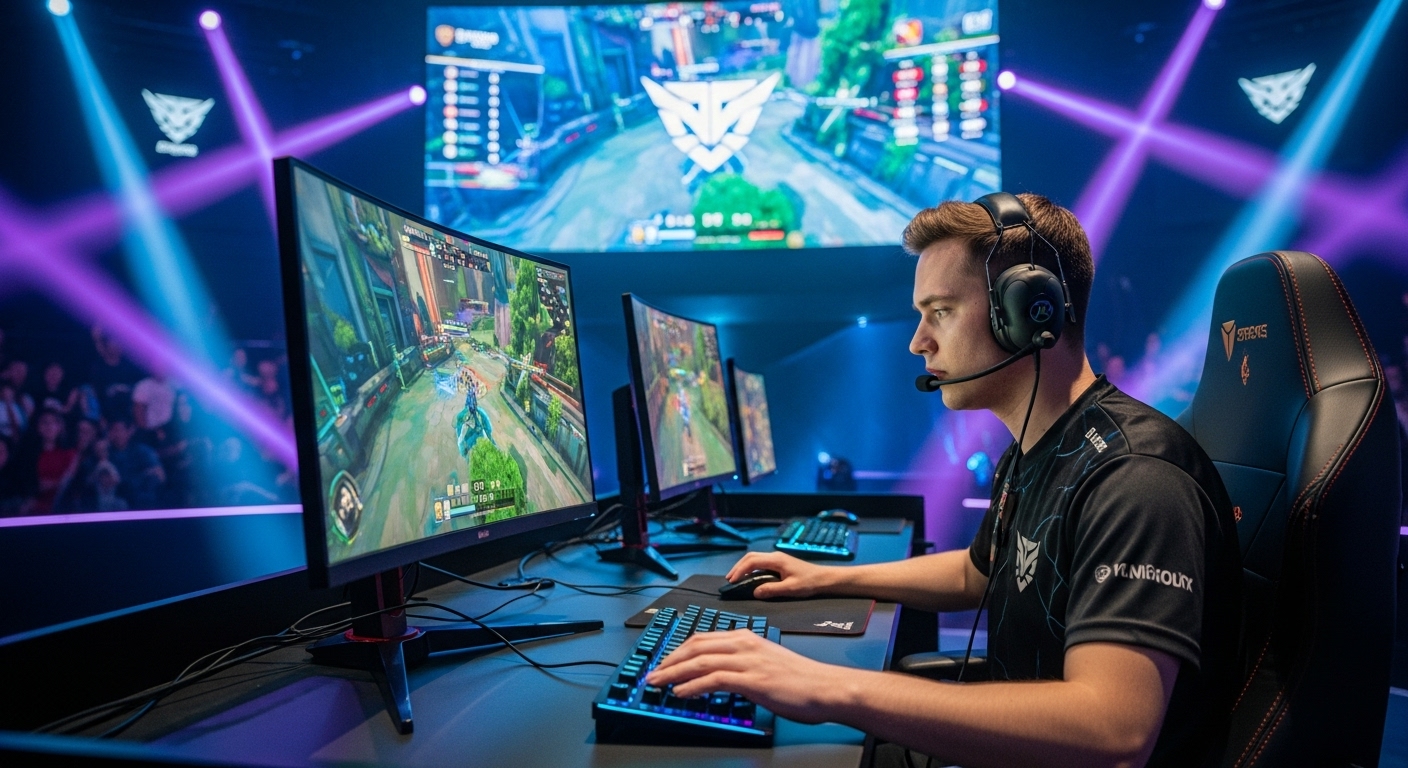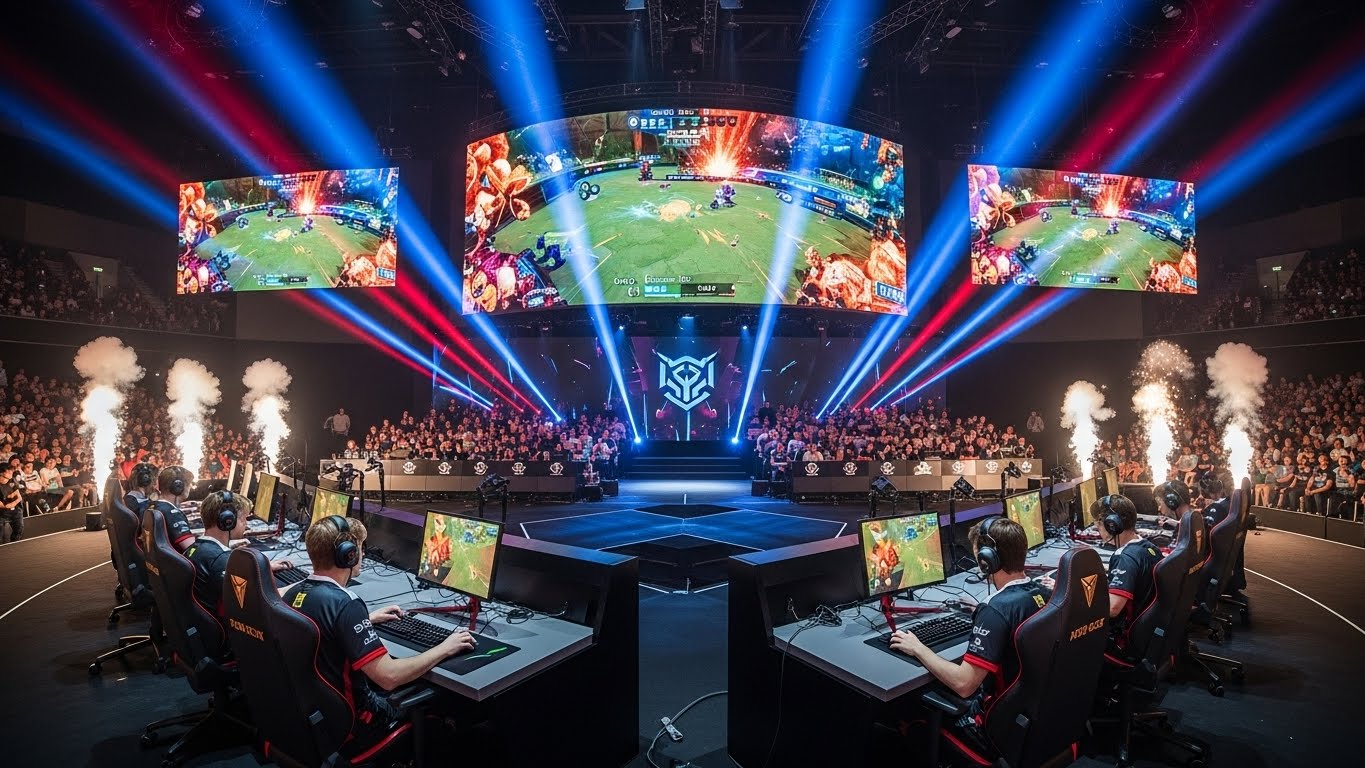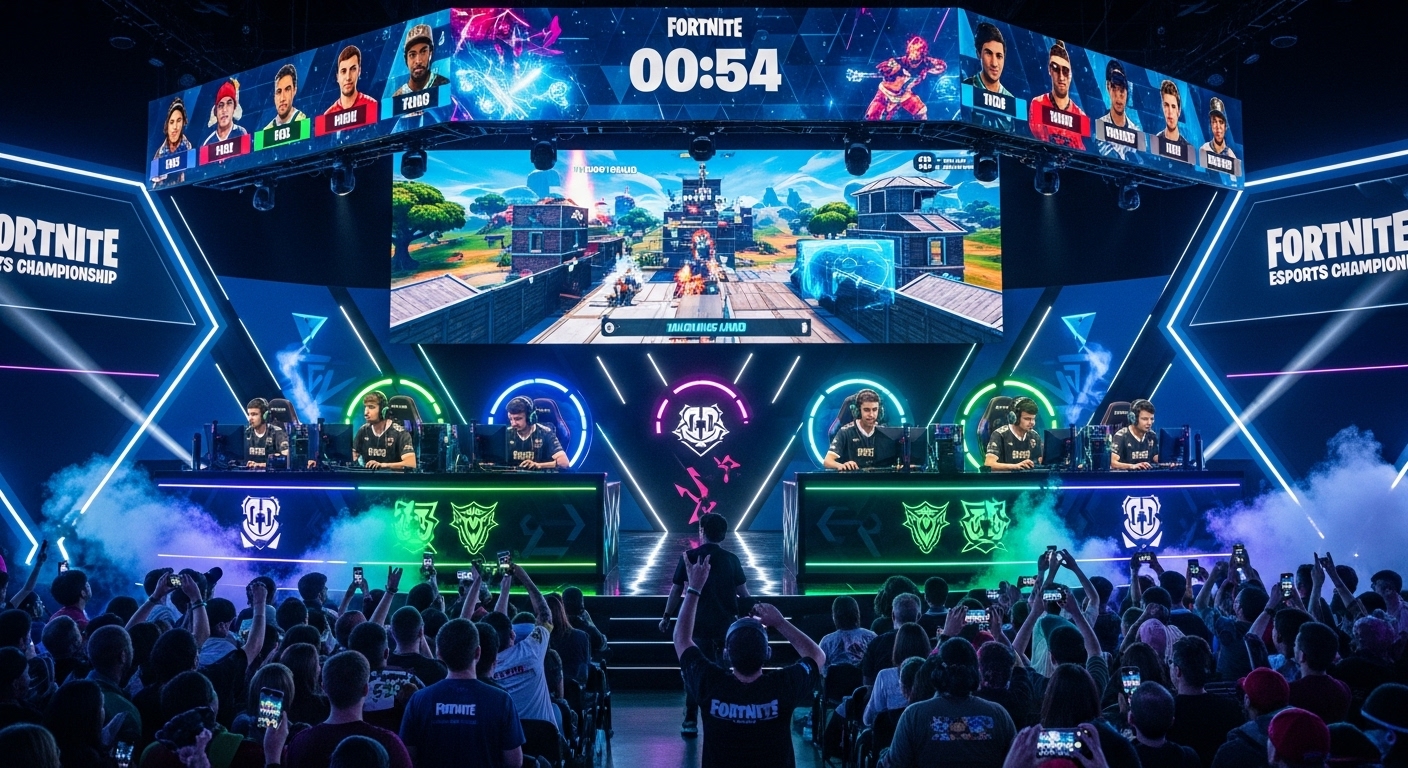
Esports isn’t just a collection of games played online — it’s become a global entertainment industry with its own stars, sponsors, production crews, and broadcast ecosystems. As the audience matures and technology advances, the way esports is produced and consumed is changing fast. This post explores where esports broadcasting is headed: the technologies, production models, monetization opportunities, and the business and creative challenges that will define the next decade.
Snapshot: where we are now
Esports viewership has exploded from a niche of early adopters to a global audience measured in the hundreds of millions. By 2025 the global esports audience is expected to surpass roughly 640 million people, split between dedicated and casual viewers — and a large share of those viewers consume content on mobile devices.
That scale means broadcasters, publishers, and event organizers can no longer treat esports as “just streams.” Today’s top esports events aim for a multi-platform presence: high-production streams on Twitch and YouTube, regionalized feeds, simultaneous feeds for different languages, highlight reels for social, in-arena screens, and clips for short-form platforms. But scale also brings pressure: viewers expect instant highlights, deep statistics, immersive camera angles, and personalization — all delivered with minimal latency.
Big-picture forces reshaping esports broadcasting
Several overlapping forces will shape the future:
- Cloud-native and remote (REMI) production — moving heavy parts of the broadcast chain off-site.
- AI-assisted workflows — automating camera selection, clipping, commentary augmentation, graphics, and highlights
- Immersive experiences — AR overlays, mixed reality stage elements, and VR spectator modes that bring viewers “inside” the game.
- Interactivity & personalization — viewers choosing feeds, camera angles, statistics overlays, and even betting/skins/commerce integrations
- New commercial models & mainstreaming — sponsorships, betting partnerships, and institutional recognition (e.g., Olympic-related events) driving new investment and scrutiny
Each of these trends affects not only what viewers see but how producers work, how rights are packaged and sold, and how revenue flows from advertisers to teams to platforms.
Cloud-native & REMI production: scalable, distributed, cost-effective
Traditional TV production required trucks, racks of hardware, and on-site crews. Esports has been ahead of the curve here: many tournaments already operate with localized event staff while centralizing production services. The next step is cloud-native live production — encoding, switching, replay, graphic rendering, and even camera management in the cloud. This enables:
- Scalability: spin up extra production capacity for big events and scale down for smaller ones.
- Global talent pools: play-by-play casters, observers, and technical directors can work from anywhere.
- Reduced travel & carbon footprint: fewer people need to be physically present at each event.
- Faster iteration: deploy new graphic packages or A/B test overlays for different audiences.
Research and industry reporting show broadcasters increasingly adopting these models because they reduce capital expense and increase flexibility — particularly attractive for an industry where tournament frequency and geographic reach keep growing. However, cloud and REMI introduce new technical requirements: reliable uplinks, edge compute for low-latency workflows, and robust redundancy plans to avoid catastrophic production failures.
AI: the autopilot for highlights, stats, and even casting
AI is already moving from a novelty to a core operational tool.
- Auto-highlighting & clipping: Machine vision and game-event detection can generate instant clips of key moments — kills, round-winning plays, buzzer-beaters — enabling rapid social distribution and personalized highlight reels.
- Automated camera switching & OBS’ing: AI can learn what visuals viewers prefer (e.g., focus on specific players, weapon fights, or objective cameras) and assist with observer camera decisions.
- Real-time analytics & augmented commentary: AI-driven stats overlays, predicted win probabilities, and post-event micro-analysis augment human casters and enrich replays.
- Synthetic voices and summarization: For less critical languages or niche feeds, TTS and summarization can deliver localized coverage at minimal cost.
Vendors and broadcasters are shipping AI tools focused on calibration, background separation, and content tagging — lowering the barrier to create broadcast-quality augmented visuals. That said, AI won’t replace top-tier human casters and observers any time soon; its biggest impact will be to amplify human teams and democratize production quality for smaller events.
Immersive tech: AR, mixed reality, and VR spectatorship
One of esports’ biggest opportunities is immersion. Because the “field” is digital, broadcast producers can layer experiences in ways impossible in live traditional sports:
- Augmented overlays: Live maps, player heatmaps, and trajectory indicators can be anchored to the in-game world or the stage, giving context without breaking immersion. Advances in AR graphics tooling and AI-driven calibration make these overlays more reliable and cheaper to deploy
- Mixed-reality stages: Imagine a studio where the host stands beside a 3D replay of a play, or where the winner’s trophy appears as an in-game object on stage. These techniques are great for highlight production and sponsor integration.
- VR spectator modes: For some titles — racing sims, flight combat, or arena shooters — full VR spectator modes allow a small number of fans to experience matches from first-person or cinematic vantage points. Though limited by
The barrier for these experiences is dropping. As tooling improves and AI assists with calibration and keying, immersive elements will become standard for top-tier events and must-have differentiators for premium broadcasts.
Interactivity and personalization: viewers in control
Traditional linear TV is unidirectional: producers decide what the audience sees. Esports viewers expect more agency. The future will emphasize:
- Multi-angle feeds and camera selection: Let viewers choose a player POV, a strategic map feed, or a “director’s cut” created by AI.
- Dynamic overlays & data layers: Viewers toggle statistics, player bios, or betting odds on/off. Personalized overlays (e.g., showing stats for the player you follow) become normative.
- Live polling and chat-driven triggers: Integrated interactions can influence replays, award fan-driven “moment of the game” clips, and let communities steer minor broadcast elements.
- Commerce and microtransactions: Watch-and-buy experiences (player skins, event merchandise, sponsor promos) are embedded into the stream, shortening conversion paths and creating measurable value for sponsors.
These features require new broadcast architectures (APIs, low-latency paths for interactive events, and robust moderation for chat-driven content). Done well, interactivity increases watch time, monetization per viewer, and loyalty — but it also raises moderation and UX challenges.
Monetization: beyond ad slots
Monetization in esports broadcasting is diversifying:
- Platform ads and sponsorships: As events professionalize, brands pay for integrated ads, overlays, and activations tailored to gaming audiences. Betting companies are moving into sponsorships in some regions and titles, adding regulatory complexity.
- Paywalled premium tiers and microtransactions: Premium camera angles, ad-free viewing, VR seats, and paid VOD passes.
- Direct commerce & affiliate ecosystems: Embedded product links, in-stream drops, and merchandising.
- Rights & sublicensing: Regional broadcasters and digital platforms can buy localized rights to simulcast, translate, or create derivative programming.
- Event-based revenue: Live ticketing, in-arena experiences, and side events still matter for both income and marketing.
Importantly, as esports moves into mainstream institutional territory (e.g., announcements of Olympic Esports Games and other major endorsements), expect more traditional media money and stricter commercial standards — and with them, demands for reliability, brand-safe environments, and measurable KPIs
Production economics: democratization of broadcast quality
Cloud production, AI tools, and better off-the-shelf kit mean that high production values become accessible to more event organizers. Smaller leagues and indie tournaments can now produce near-professional streams without the capital costs of traditional broadcast infrastructure. Reports from industry analysts highlight that cloud/REMI workflows will blur the line between tiers of production — what used to be only feasible for global championships can be done more cheaply and more frequently.
This democratization is a double-edged sword: viewership becomes ever more fragmented, and standing out requires creative production choices and strong community engagement. At the same time, more content means more rights to package, more sponsorship inventory, and more niches for creators to serve.
Reliability, latency, and integrity: the unsung technical battles
As streaming becomes interactive and monetized, the infrastructure becomes a business-critical system. Viewers expect:
- Ultra-low latency: Especially for betting, interactive overlays, or synchronized multi-angle experiences. Reducing glass-to-glass latency requires investments in CDN edge compute, optimized encoders, and real-time protocols.
- High availability: Outages during finals are reputational disasters. Robust redundancy and failover, multi-CDN strategies, and cloud standby systems are essential.
- Anti-cheat & match integrity measures: With more money and betting on the line, broadcasters must coordinate with publishers and leagues on integrity monitoring and delay strategies where needed.
- Moderation & safety: Live chat and interactive features must be moderated at scale — automated moderation helps, but human oversight is still necessary.
Technical excellence will become a competitive differentiator. Viewers will gravitate to platforms that are reliable, fast, and give them the controls they want.
Regulation, content rights, and ethical considerations
As esports grows, it attracts mainstream advertisers and institutional partners who demand transparency, safety, and compliance. Key areas:
- Gambling sponsorships and advertising: These can be lucrative but carry regulatory burdens and brand-safety concerns. Different regions have
- Intellectual property and streaming rights: Developers often control how matches can be rebroadcast; rights packages will become more complex and valuable as platforms compete for exclusivity.
- Human rights & geo-politics: Hosting and sponsorship decisions (e.g., high-profile international events) can spark
- Data privacy: Personalized overlays and targeted ads mean collecting viewer data — requiring clear consent flows and compliance with regional privacy laws.
Broadcasters that adopt ethical frameworks and transparent policies will win trust from viewers and sponsors.
Case studies & early signals
A few examples point to how the future is unfolding today:
- Cloud & REMI pilots: Major sports broadcasters and production vendors are trialing fully cloud-native workflows for big events with remote commentators and centralized control rooms, indicating the path forward for esports production.
- AI-driven highlights distribution: Platforms and third-party tools already auto-generate clips during live events, powering social distribution and short-form engagement. This accelerates discoverability and helps events go viral.
- Immersive overlays in big tournaments: Some events are using AR-infused graphics to present data and replays, and vendors are improving calibration and keying to make these effects faster to deploy.
These real-world moves provide proof-of-concept and reduce the risk for other organizers to follow.
What broadcasters, leagues, and teams should do now
If you’re a stakeholder in esports broadcasting — whether a platform, league, caster, or production company — here are practical priorities:
- Invest in cloud-ready workflows: Evaluate hybrid architectures that allow seamless on-site to cloud transitions. Start with non-critical components (VOD, replay rendering) before migrating live switching.
- Adopt AI for augmentation, not replacement: Use AI to automate repetitive tasks (clips, basic stats), freeing human talent to focus on storytelling and high-value creative work.
- Design for interactivity from day one: Build APIs, low-latency endpoints, and modular overlays so future interactive features can be added without massive rework.
- Harden latency and redundancy: Partner with CDNs and cloud providers that offer edge compute and real-time protocols; have multi-CDN failover plans.
- Create flexible commercial packages: Offer sponsors mix-and-match opportunities — in-stream overlays, in-game activations, social-first clips. Prepare legal frameworks for betting and other regulated partners.
- Prioritize moderation and safety: Automate where possible, but maintain human review for high-risk content and sensitive events.
- Train teams for hybrid production: Build operational playbooks for remote director-caster coordination and upskill technical staff on cloud tools.
These steps lower risk and position organizations to take advantage of the systemic changes coming to broadcasting.
Risks, unknowns, and where caution is warranted
The future is promising but not preordained. Watch for:
- Fragmentation of attention: An abundance of niche streams could dilute major events’ audiences unless organizers package and curate content well.
- Overreliance on automation: If AI tools are used without human oversight, quality and context can suffer — especially for nuanced commentary and cultural references.
- Regulatory shocks: Sudden law changes on gambling, data privacy, or broadcast rights in major markets can force quick pivots.
- Platform consolidation: Large platforms may push for exclusivity, impacting discoverability and monetization for smaller creators.
Good governance, diversity of distribution, and robust contingency plans will be essential.
A look five to ten years ahead
If the present trajectory holds, by the early 2030s we’ll likely see:
- Hybrid broadcast ecosystems where major events run multi-tiered coverage: free, global director-driven feeds; premium, personalized experiences with VR/AR; and localized language feeds with region-specific sponsorships.
- AI-human production teams where AI handles routine clipping, camera cueing, and overlay management while humans craft narratives and long-form storytelling.
- Deeper integration of commerce so viewers can buy merchandise, in-game items, or event tickets seamlessly from the player.
- A mature regulatory framework in many markets governing betting ads, minors’ exposure, and streaming rights — with clear industry standards for integrity and safety.
- New spectator models, including small-group VR lounges, subscription micro-feeds (e.g., “Coach Cam” or “Player POV” passes), and in-game synchronized spectating where a limited number of fans can join a match’s immersive feed.
These shifts will make esports broadcasting more like a hybrid between traditional sports TV, interactive gaming, and theme-park entertainment.
Final thoughts: storytelling still wins
While technology — cloud, AI, AR/VR, low-latency streaming — will reshape how esports are produced and monetized, the underlying battleship that steams through all change is storytelling. Fans come for the drama: the player narratives, rivalries, clutch plays, and human moments that create fandom. Technology should be an amplifier for those stories, not a replacement.
For producers and broadcasters, the smartest bets are those that combine technical excellence with clear creative direction: use AI to free humans for better storytelling, use cloud to focus resources on differentiating content, and use interactivity to deepen fan relationships rather than distract from the core competition.